
The field of metabolic and cellular research continues to evolve as scientists seek to better understand the biological pathways involved in energy regulation, cellular function, and metabolic adaptation.
One compound that has generated growing interest within research communities is 5-Amino-1MQ, a small molecule currently being investigated for its interaction with Nicotinamide N-Methyltransferase (NNMT), an enzyme involved in cellular metabolism and energy-related pathways.
As researchers continue to explore the biological significance of NNMT, compounds such as 5-Amino-1MQ have become valuable tools for investigating how cells regulate energy utilisation, methylation processes, and metabolic signalling.
This article explores the scientific background of 5-Amino-1MQ, the role of NNMT in biological systems, and the ongoing research surrounding this increasingly studied compound.
5-Amino-1MQ is a synthetic small molecule that has been investigated in laboratory settings as an inhibitor of Nicotinamide N-Methyltransferase (NNMT).
Unlike peptide-based research compounds, 5-Amino-1MQ is classified as a small molecule and is studied for its potential influence on enzyme activity within cellular systems.
Researchers have become interested in the compound because NNMT plays a role in several important biological pathways involving:
As scientific understanding of these systems expands, compounds targeting NNMT continue to attract attention within metabolic and longevity research.
NNMT stands for Nicotinamide N-Methyltransferase.
This enzyme is found in various tissues throughout the body and participates in the metabolism of nicotinamide, a form of vitamin B3.
NNMT catalyses the transfer of methyl groups from S-adenosylmethionine (SAM) to nicotinamide, producing metabolites that participate in broader metabolic processes.
Because this reaction sits at the intersection of multiple biological pathways, researchers have become increasingly interested in understanding NNMT’s wider physiological role.
Scientific investigations continue to examine how NNMT activity may influence cellular energy balance, methyl donor utilisation, and metabolic adaptation.
One reason NNMT has attracted considerable scientific attention is its connection to nicotinamide metabolism.
Nicotinamide serves as a precursor within pathways associated with NAD+ production.
NAD+ is a coenzyme involved in numerous cellular processes, including:
Researchers investigating healthy ageing and metabolic biology frequently study NAD+ related pathways because of their importance in cellular function.
The relationship between NNMT activity and nicotinamide utilisation has therefore become an active area of scientific investigation.
Scientific interest in NNMT has expanded significantly over the last decade.
Researchers have observed that NNMT expression varies between different tissues and may change under different biological conditions.
This has led scientists to investigate the enzyme’s role in:
By using compounds such as 5-Amino-1MQ, researchers can explore how alterations in NNMT activity affect broader biological systems.
Another important area of NNMT research involves methylation.
Methylation is a fundamental biological process that influences numerous cellular activities.
It plays a role in:
NNMT consumes methyl donors as part of its normal activity, which has prompted researchers to investigate how changes in enzyme function may influence methylation-related pathways.
Understanding these relationships remains an important focus of ongoing research.
Researchers frequently use selective compounds to investigate specific biological pathways.
5-Amino-1MQ serves as a tool for studying NNMT biology and its broader physiological implications.
Experimental investigations involving 5-Amino-1MQ have explored:
These studies help scientists better understand how enzyme activity contributes to complex biological processes.
The growing popularity of longevity science has increased interest in pathways associated with cellular health and metabolic efficiency.
Researchers investigating healthy ageing often examine:
Because NNMT interacts with several of these systems, compounds such as 5-Amino-1MQ have become relevant within broader longevity-related research programmes.
While much remains to be understood, the enzyme continues to represent an important area of scientific investigation.
Cells rely on highly coordinated energy systems to maintain function and adapt to environmental demands.
Mitochondria are central to these processes, acting as key sites of cellular energy production.
Researchers study mitochondrial biology because it influences:
Although the relationship between NNMT and mitochondrial function remains an active area of study, growing evidence suggests that these pathways may be interconnected.
Consequently, compounds such as 5-Amino-1MQ continue to attract interest among scientists studying cellular energetics.
Modern metabolic research increasingly focuses on understanding biological systems as interconnected networks rather than isolated pathways.
Scientists now investigate how:
Metabolic regulators work together to coordinate physiological function.
NNMT represents one component of these broader networks, making it a valuable target for laboratory investigation.
As scientific knowledge continues to expand, researchers are likely to further investigate:
Understanding how the enzyme contributes to cellular metabolism.
Exploring interactions between NNMT and NAD+ related systems.
Studying how cells respond to changing energy demands.
Investigating communication networks that regulate metabolic function.
Examining pathways associated with healthy cellular ageing and resilience.
These areas represent exciting opportunities for future scientific discovery.
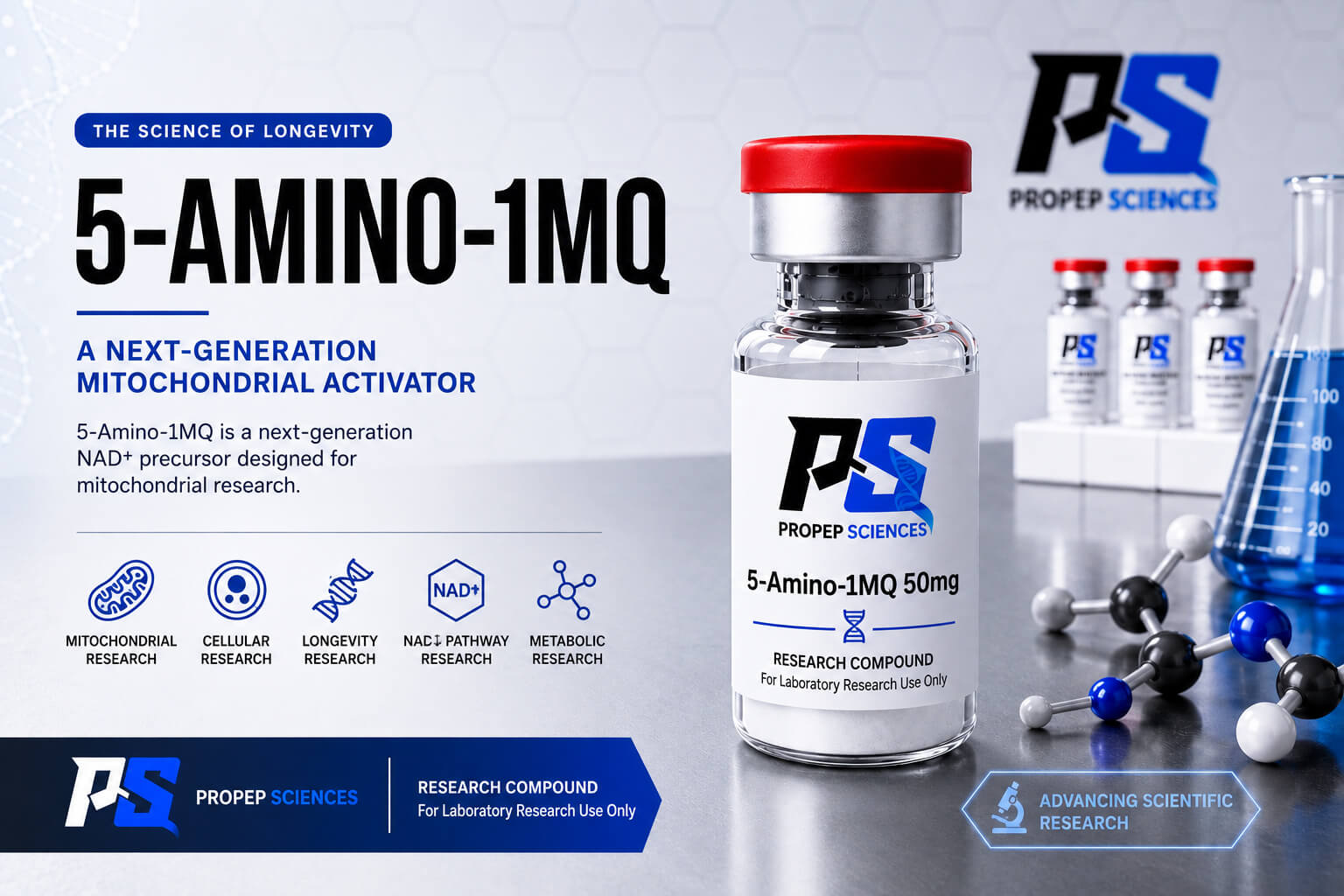
Product Name: 5-Amino-1MQ
Research Category: Metabolic & Cellular Research
Compound Type: Small Molecule NNMT Inhibitor
Appearance: White to Off-White Lyophilised Powder
Purity: ≥98% (HPLC)
5-Amino-1MQ has become an increasingly important compound within metabolic and cellular research due to its interaction with Nicotinamide N-Methyltransferase (NNMT).
Researchers continue to investigate how NNMT influences cellular metabolism, methylation processes, nicotinamide pathways, and energy regulation.
As scientific understanding of these interconnected biological systems evolves, 5-Amino-1MQ is likely to remain a valuable research tool for exploring the mechanisms that underpin cellular function and metabolic adaptation.
5-Amino-1MQ supplied by Propep Sciences is intended strictly for laboratory research purposes only.
This product is not intended for human consumption, veterinary use, diagnosis, treatment, cure, mitigation, or prevention of any disease or medical condition.
Researchers are responsible for ensuring compliance with all applicable laws, regulations, and institutional guidelines within their jurisdiction.