
The field of metabolic peptide research has expanded significantly in recent years as scientists seek to better understand the complex biological pathways involved in energy regulation, nutrient sensing, and metabolic signaling.
Among the compounds currently attracting considerable scientific attention is Retatrutide, an investigational peptide that has been designed to interact with multiple metabolic receptor systems simultaneously.
Unlike earlier peptide compounds that target a single receptor pathway, Retatrutide has been developed as a triple receptor agonist, making it a unique subject of study within modern metabolic research.
Researchers continue to investigate its biological activity, receptor interactions, and potential implications for understanding energy homeostasis and metabolic regulation.
This article explores the scientific background of Retatrutide, its mechanism of action, areas of ongoing research, and why it has become one of the most discussed compounds in contemporary peptide science.
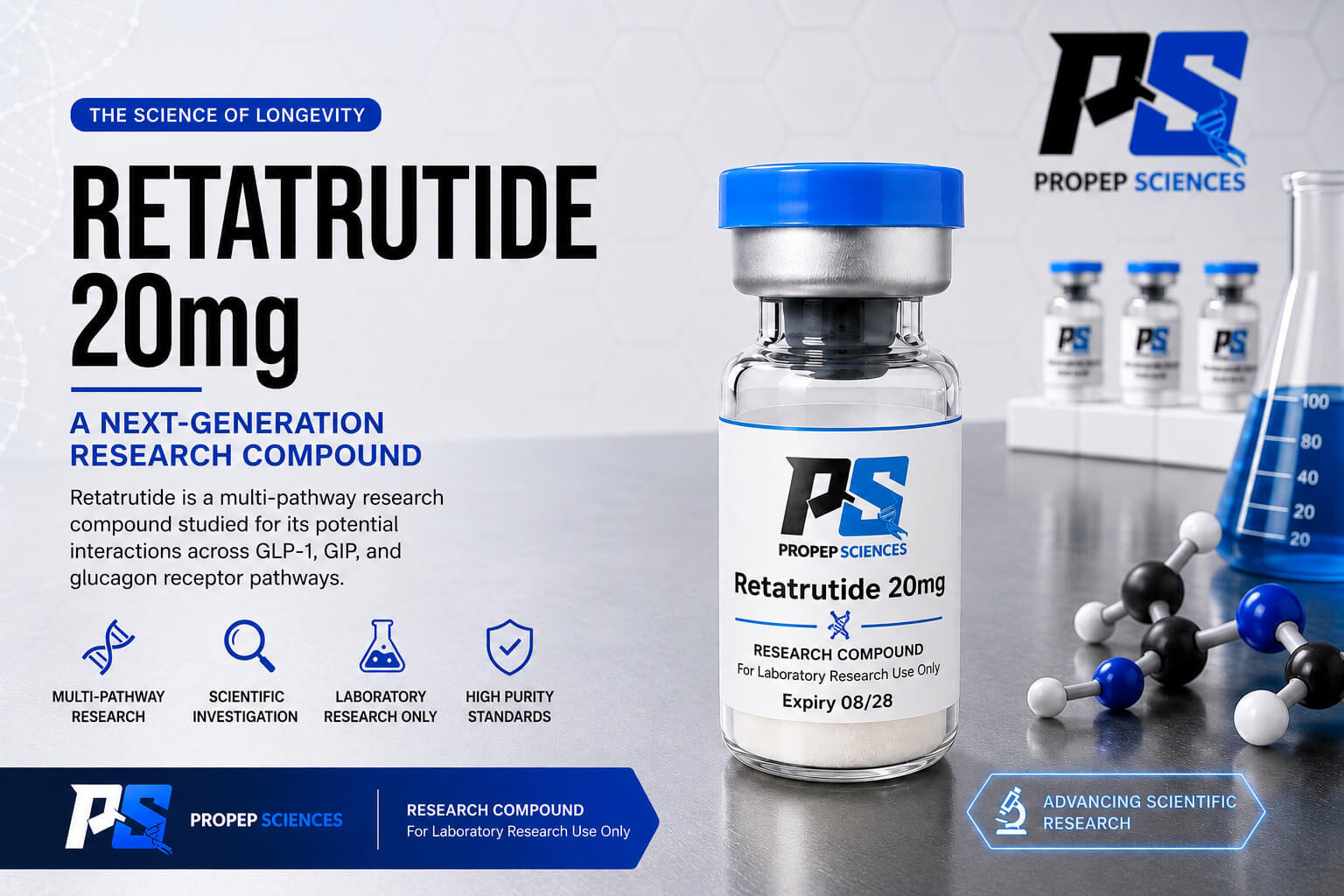
Retatrutide is a synthetic peptide developed for research purposes that acts as a triple receptor agonist.
Researchers have designed the molecule to interact with three important signaling pathways:
By targeting multiple receptor systems simultaneously, Retatrutide provides researchers with a unique opportunity to investigate how these interconnected pathways influence metabolic signaling.
The peptide represents an evolution in metabolic research, moving beyond single-pathway approaches toward a broader understanding of biological regulation.
The human body relies upon a sophisticated network of hormones and signaling molecules to maintain energy balance.
Numerous biological systems work together to regulate:
Researchers study these pathways because they form a highly interconnected network that influences many aspects of physiology.
Retatrutide has generated significant scientific interest because it engages several of these pathways simultaneously, allowing researchers to explore how multiple receptor systems interact.
GLP-1 receptors have become one of the most extensively studied targets in metabolic science.
Glucagon-Like Peptide-1 is a naturally occurring hormone released within the gastrointestinal tract following nutrient intake.
Researchers have investigated GLP-1 signaling in relation to:
Because of the central role these receptors play within metabolic pathways, they continue to be an important focus of scientific investigation.
Retatrutide includes GLP-1 receptor activity as one component of its multi-receptor design.
Glucose-Dependent Insulinotropic Polypeptide (GIP) is another naturally occurring hormone involved in metabolic signaling.
GIP receptors are expressed throughout multiple tissues and participate in complex physiological communication networks.
Research involving GIP pathways has expanded considerably in recent years as scientists seek to understand their broader biological functions.
Areas of investigation include:
The inclusion of GIP receptor activity distinguishes Retatrutide from earlier generations of metabolic peptides.
The third receptor system targeted by Retatrutide is the glucagon receptor.
Glucagon is a naturally occurring hormone involved in maintaining metabolic balance and energy availability.
Researchers have long studied glucagon signaling because of its role in:
By incorporating glucagon receptor agonism alongside GLP-1 and GIP receptor activity, Retatrutide provides researchers with a novel model for studying integrated metabolic signaling.
Historically, many peptide-based investigations focused on single receptor systems.
However, biological systems rarely operate in isolation.
Modern research increasingly recognises that metabolic regulation involves multiple overlapping pathways that communicate continuously.
Triple receptor agonism offers researchers an opportunity to investigate:
Retatrutide has therefore become an important tool for exploring how multiple biological systems work together.
Energy homeostasis refers to the body’s ability to maintain balance between energy intake, storage, and expenditure.
This process is controlled by numerous signaling molecules and receptor pathways.
Researchers continue to investigate:
Retatrutide has attracted attention because its receptor profile allows scientists to study several of these mechanisms simultaneously.
Research involving Retatrutide remains ongoing and continues to expand.
Areas of scientific interest include:
Researchers investigate how multiple receptor pathways coordinate metabolic communication.
Studies examine interactions between hormone systems and receptor signaling networks.
Scientists continue exploring mechanisms involved in energy utilisation and biological adaptation.
Retatrutide is being studied within experimental models that investigate how organisms respond to nutrient availability.
Researchers are also interested in understanding how simultaneous receptor activation influences biological signaling.
Retatrutide represents part of a broader trend within peptide science toward increasingly sophisticated molecular design.
Advances in peptide engineering have enabled researchers to create compounds capable of interacting with multiple biological targets.
Modern peptide development focuses on:
These innovations continue to expand the possibilities of peptide-based research.
The growing scientific interest in compounds such as Retatrutide reflects a broader shift toward understanding biological systems as interconnected networks.
Future research may further explore:
As scientific understanding advances, compounds like Retatrutide may continue to provide valuable insights into the biology of metabolic regulation.
Product Name: Retatrutide
Research Category: Metabolic Research Peptide
Appearance: White Lyophilised Powder
Purity: ≥99% (HPLC)
Molecular Type: Triple Receptor Agonist Peptide
Target Receptors:
Storage Recommendations
Retatrutide represents an important development in metabolic peptide research due to its unique ability to engage GLP-1, GIP, and glucagon receptor pathways simultaneously.
Its multi-receptor design has made it a valuable subject of investigation for researchers studying metabolic signaling, endocrine communication, energy regulation, and receptor pharmacology.
As scientific understanding of these complex biological systems continues to evolve, Retatrutide is likely to remain a significant focus within the field of peptide research.
Retatrutide supplied by Propep Sciences is intended strictly for laboratory research purposes only.
This product is not intended for human consumption, veterinary use, diagnosis, treatment, cure, mitigation, or prevention of any disease or medical condition.
Researchers are responsible for ensuring compliance with all applicable laws, regulations, and institutional guidelines within their jurisdiction.